
Nana Patekar Dies at 75: The Shocking Loss of a Bollywood Legend
Veteran Indian actor Vishwanath “Nana” Patekar dies at the age of 75, bringing an end to one of Indian cinema’s most distinctive acting careers.
Patekar passed away in the early hours of Thursday, October 8, after suffering a severe cardiac arrest at his residence in Dona Paula, Goa. He was found unconscious after reportedly experiencing chest pain and was taken to Manipal Hospital, where doctors attempted to revive him. According to reports, a medico-legal case was registered and a post-mortem examination was to be conducted.
For audiences who grew up watching Hindi cinema, Nana Patekar was never simply another familiar face. He had a voice that could command an entire scene, an intensity that could make even silence feel threatening, and an ability to move effortlessly between deeply serious dramatic roles and unexpectedly comic performances.
His death marks the loss of an actor whose career stretched across nearly five decades and whose work reached far beyond conventional ideas of what a Bollywood star was supposed to look like or sound like.
A Career That Began With Gaman
Born Vishwanath Dinkar Patekar on January 1, 1951, in Maharashtra, Nana Patekar entered the film industry in the late 1970s. His film debut came with Gaman in 1978, beginning a journey that would eventually establish him as one of the most respected performers in Hindi and Marathi cinema.
But Patekar’s rise was not built around the traditional image of a mainstream leading man.
He developed his reputation through characters that were complicated, morally difficult and often emotionally unpredictable. His performances were rarely dependent on glamour. Instead, they relied on voice, body language, timing and an almost unnerving ability to make a character feel completely lived-in.
That quality became one of his greatest strengths.
Whether he was playing a hardened criminal, a troubled soldier, a police officer, a broken father or a comic gangster, Patekar approached his characters with the same seriousness. Even when the film itself was lighthearted, he never appeared to be simply “performing” for the audience.
He inhabited the character.
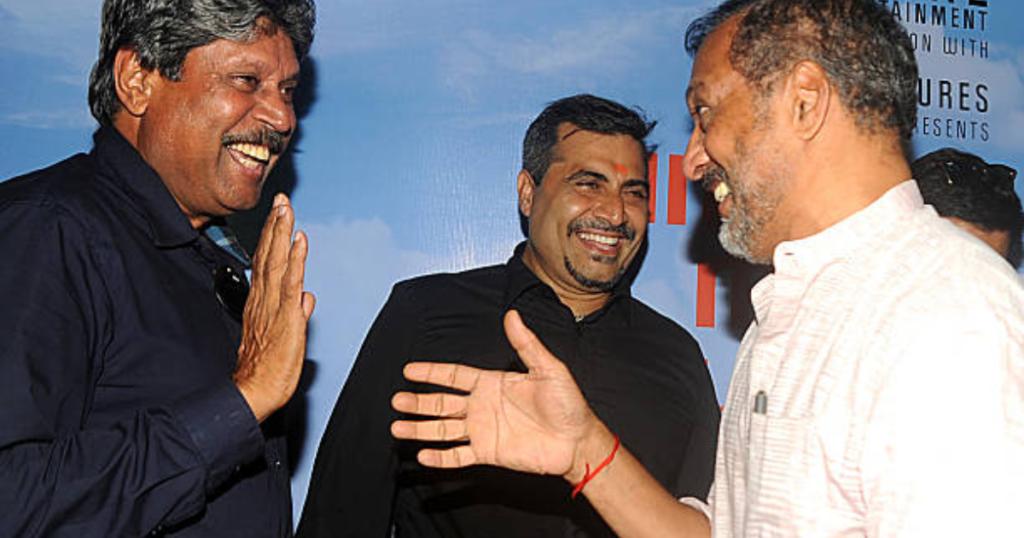
From Serious Drama to National Recognition
Patekar’s career began gathering significant critical attention through films such as Ankush, Pratighaat and Salaam Bombay!, Mira Nair’s acclaimed film that received an Academy Award nomination for Best Foreign Language Film.
But it was his work in films such as Parinda and Krantiveer that firmly established his reputation as an actor capable of carrying emotionally demanding material.
His performance in Parinda earned him the National Film Award for Best Supporting Actor. He later won the National Film Award for Best Actor for Krantiveer, and another Best Supporting Actor National Award for Agni Sakshi.
Three National Awards are an extraordinary achievement, but what made Patekar’s career unusual was the fact that these awards did not define the limits of his work.
He continued moving between critically acclaimed cinema and commercial films without allowing himself to become trapped in one particular image.
That versatility became one of the defining characteristics of his career.
Nana Patekar Was Never Afraid of Difficult Characters
One of the most memorable aspects of Patekar’s filmography is the sheer variety of characters he played.
He could be intimidating without raising his voice. He could be vulnerable without becoming sentimental. He could be funny without losing the seriousness of the character.
Films such as Prahaar, Agni Sakshi, Yashwant, Ab Tak Chhappan and Apaharan showcased different sides of his acting ability, while his work in Marathi cinema allowed him to explore another range of characters and storytelling traditions.
He also directed and wrote films, including Prahaar: The Final Attack, demonstrating that his interest in cinema extended beyond performing in front of the camera.
His relationship with theatre also remained important to his artistic identity. Patekar’s performances carried the discipline of someone who understood that an actor’s presence cannot depend entirely on editing, music or visual spectacle.
The performance itself had to hold the audience.
And his often did.
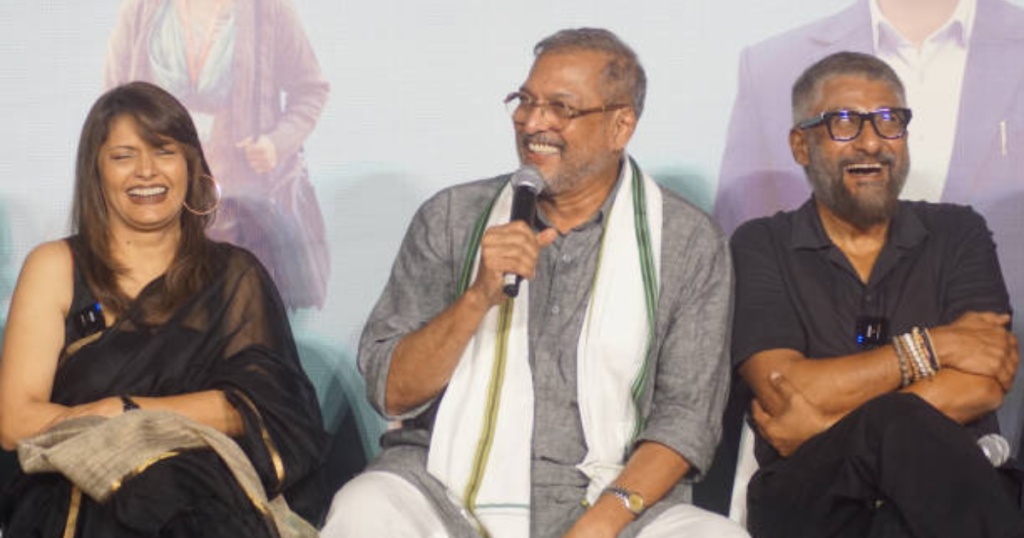
Then Came Uday Shetty
For an entirely different generation of viewers, however, Nana Patekar became unforgettable because of one particular character: Uday Shetty.
In Welcome, the 2007 comedy directed by Anees Bazmee, Patekar played the gangster Uday Shetty alongside Anil Kapoor’s Majnu Bhai.
The role introduced a younger generation to a completely different side of the actor.
Uday Shetty was technically a gangster, but Patekar played him with such comic frustration, exaggerated seriousness and impeccable timing that the character became one of the most memorable comic figures in Hindi cinema.
The film became a major part of Indian pop culture, and Patekar’s dialogue delivery became one of its biggest strengths.
It was particularly impressive because the performance never felt like an actor trying to become a comedian.
He played Uday as if the character genuinely believed everything happening around him was a matter of life and death.
That seriousness was exactly what made the comedy work.
For audiences who may not have been familiar with his earlier dramatic work, Welcome became their introduction to Nana Patekar.
And suddenly, the actor known for intense performances had become a favourite among a completely new generation.
A Voice That Became Part of His Identity
There are actors whose faces are instantly recognisable.
With Nana Patekar, the voice was equally important.
His dialogue delivery had a distinct rhythm. He could stretch a pause, sharpen a single word or lower his voice just enough to completely change the mood of a scene.
That quality became particularly powerful in films such as Krantiveer, where his speeches carried enormous emotional and political weight.
Even years after the film’s release, clips of Patekar’s performance continue to circulate online.
Following news of his death, one of his Krantiveer monologues began trending again, with viewers pointing out how relevant his words still felt.
That says something important about his legacy.
Some performances belong to their time.
Others keep finding new audiences.
Patekar had both.
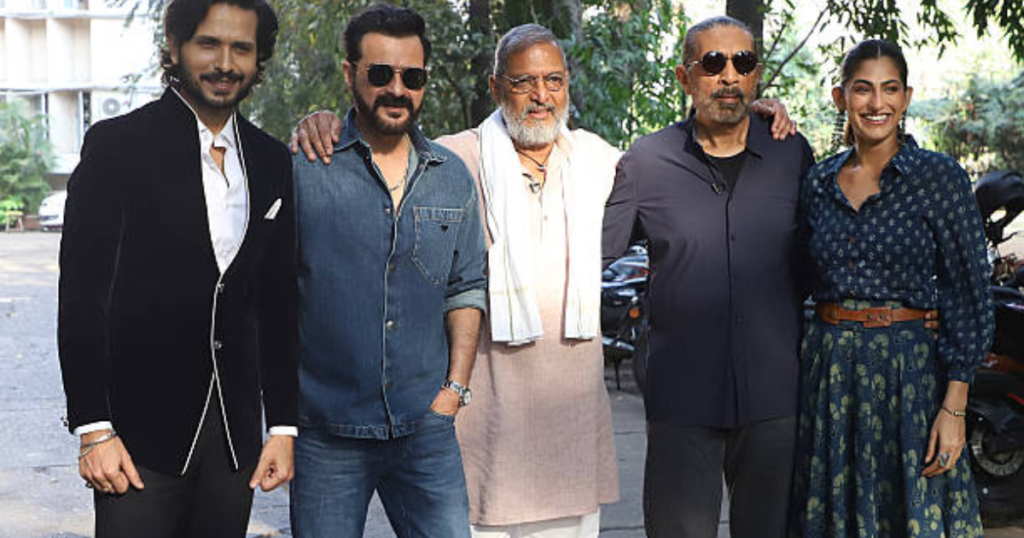
His Marathi Cinema Legacy
While Hindi cinema introduced Nana Patekar to a massive mainstream audience, his connection with Marathi cinema remained an important part of his career.
One of his most celebrated later performances came in the Marathi film Natsamrat, where he played Ganpat Belwalkar, an ageing theatre actor dealing with loss, family and the painful realities of growing old.
The performance was another reminder of why Patekar was regarded so highly by critics.
He did not need spectacle to create emotional impact.
A face, a pause, a trembling voice or a single line could be enough.
His work in Marathi cinema also demonstrated that his appeal was never dependent solely on Bollywood’s commercial machinery. He belonged to a much wider theatrical and cinematic tradition.
A Career Spanning Nearly Five Decades
From Gaman in 1978 to his later projects, Patekar’s career covered almost five decades.
Over that period, he worked across Hindi and Marathi cinema and also appeared in films in other Indian languages. His filmography included everything from serious social dramas and crime films to action movies, comedies and emotionally heavy character pieces.
He continued working well into his seventies.
Recent projects included appearances in films such as Housefull 5, while his later career also included Marathi and other projects that demonstrated that he had no intention of being defined only by the films that made him famous decades earlier.
That longevity is particularly remarkable because Patekar never followed the conventional route of constantly reinventing himself for changing trends.
Instead, he remained recognisably himself.
And audiences kept coming back to him.
The Honour of the Padma Shri
Patekar’s contribution to Indian cinema was formally recognised when he was awarded the Padma Shri in 2013 for his contribution to the arts.
The Government of India’s official Padma Awards records list Vishwanath Dinkar Patekar, known as Nana Patekar, among the Padma Shri awardees in the field of art.
By that point, he had already established a body of work that included some of the most memorable performances in Indian cinema.
The honour added an official recognition to what audiences and filmmakers had understood for years: Patekar was not simply a successful actor. He was an artist with an unusually distinctive voice.
The Actor Who Refused to Stay in One Box
Perhaps the easiest way to understand Nana Patekar’s career is to look at the contradictions within it.
He was a celebrated National Award-winning actor who also became one of the most recognisable faces of mainstream comedy.
He played violent criminals and vulnerable men.
He was equally convincing as a serious dramatic performer and an eccentric comic character.
He worked in Hindi cinema while maintaining a strong connection with Marathi cinema.
He directed films while continuing to build his acting career.
And despite having such an unmistakable screen personality, he rarely seemed interested in playing the conventional Bollywood star.
That was part of his appeal.
You knew when Nana Patekar was on screen.
But you could never be completely sure what he was going to do with the character.
Why His Performances Stayed With Audiences
There is a particular quality to Patekar’s performances that is difficult to replicate.
He never seemed overly concerned with making his characters “likeable.”
His characters could be angry, selfish, broken, frightening, funny or deeply flawed.
But they were rarely flat.
Even when he played someone difficult to sympathise with, there was usually something beneath the surface that made the character feel human.
That is one reason his performances have aged so well.
Cinema changes. Acting styles change. Audience expectations change.
But authenticity does not become outdated.
And Patekar had that in abundance.
An Actor Who Could Make Silence Speak
Perhaps the biggest misconception about powerful acting is that it always requires a big monologue.
Nana Patekar proved otherwise.
Yes, he was famous for his dialogue delivery. Yes, some of his speeches became iconic.
But some of his strongest moments came when he said almost nothing.
A look.
A pause.
A change in expression.
A character suddenly choosing not to respond.
Patekar understood that audiences watch actors just as much when they are silent as when they are speaking.
That understanding gave his performances a weight that often remained long after the scene ended.
Nana Patekar Dies – A Shocking News
The circumstances of Patekar’s death have made the news particularly difficult for fans to process.
According to reports, he was found unconscious at his Goa residence after experiencing chest pain. Medical personnel attempted CPR before he was taken to hospital, but he could not be revived. Reports say doctors attempted resuscitation for an extended period before he was declared dead.
He was 75.
Only days before his death, Patekar had appeared at a public event in Goa. At the October 4 event, he spoke about the uncertainty of life and encouraged people to make their time meaningful.
The timing has made those words particularly poignant for audiences reflecting on his passing.
The Legacy He Leaves Behind
Nana Patekar leaves behind more than a list of awards and memorable films.
He leaves behind characters that have become part of Indian popular culture.
There is the intensity of Krantiveer.
The rawness of Parinda.
The emotional complexity of Agni Sakshi.
The grit of Prahaar.
The unforgettable comedy of Uday Shetty in Welcome.
And the deeply emotional work of Natsamrat.
Each performance revealed a different side of the same actor.
That is perhaps the greatest measure of his legacy.
Nana Patekar never needed to look like everyone else.
He never needed to behave like a conventional star.
He simply needed a character.
Give him one, and he could make it unforgettable.
A Career That Will Be Difficult to Replace
Indian cinema has produced countless talented actors, but very few have had the combination of intensity, unpredictability, comic timing and sheer individuality that Nana Patekar brought to the screen.
His death closes a remarkable chapter in Hindi and Marathi cinema.
But his performances are not going anywhere.
The films remain.
The dialogues remain.
The characters remain.
And, perhaps most importantly, the feeling he created whenever he walked into a scene remains.
That is the rare privilege of a truly memorable performer.
You may lose the actor, but you do not lose the work.
Nana Patekar’s career was built over decades, one character at a time. From his early days in Gaman to National Award-winning performances, from serious cinema to the unforgettable chaos of Welcome, he created a body of work that crossed generations and genres.
He was 75 when he died, but the characters he gave Indian cinema will continue to live far beyond him.
And for an actor, there may be no greater legacy than that.
FAQs
1. How old was Nana Patekar when he died?
Nana Patekar was 75 years old at the time of his death.
2. What was the cause of Nana Patekar’s death?
According to the report, Nana Patekar died after suffering a cardiac arrest at his residence in Goa.
3. When did Nana Patekar start his acting career?
Nana Patekar began his acting career in 1978 with the film Gaman.
4. Which awards did Nana Patekar win?
He won three National Film Awards and received the Padma Shri in 2013.
5. Which Nana Patekar role became especially popular with younger audiences?
His role as Uday Shetty in the 2007 comedy Welcome remains one of his most widely remembered performances.
6. What was Nana Patekar’s most acclaimed dramatic role?
He was widely praised for his performances in films such as Parinda, Agni Sakshi and Krantiveer.
7. Was Nana Patekar active in Marathi cinema?
Yes. Alongside Hindi cinema, he had a significant career in Marathi films and theatre.
8. When did Nana Patekar receive the Padma Shri?
He was awarded the Padma Shri in 2013 for his contribution to the arts.
9. How long was Nana Patekar’s acting career?
Nana Patekar had a career spanning nearly five decades.
10. What is Nana Patekar best remembered for?
He is remembered for his powerful dramatic performances, distinctive dialogue delivery, versatility and iconic comic roles.
Read more related articles at Poise Mag.
