
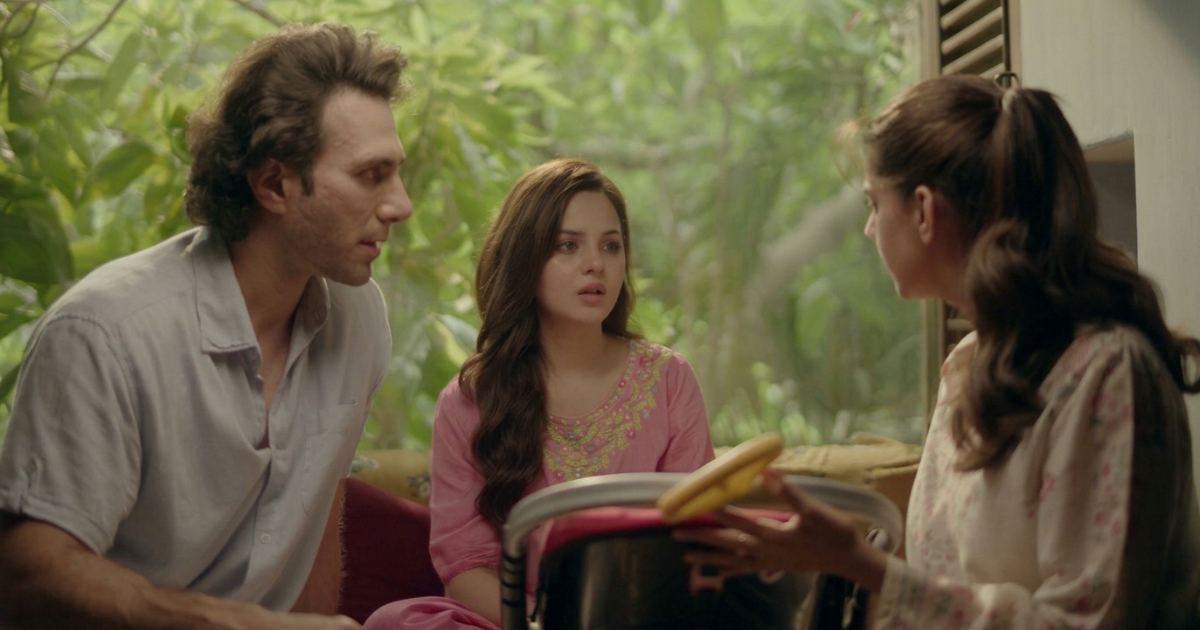
Sometimes, one missing piece can change the meaning of the entire picture. And sometimes, a person’s actions reveal a side of them we never expected to see.
That is exactly what is happening in Gulbahar episode 14, 15 and 16. A drama that once felt like a beautifully layered masterpiece of emotions and relationships is slowly becoming disturbing. The reason? Sara.
Initially, we felt sorry for Sara. Shehryar’s rude behaviour towards her made us sympathise with her, and we could understand why she was emotionally struggling. But as the story progresses, we are beginning to see another side of Sara, particularly in the way she treats Diya.
The most uncomfortable part is that Sara herself encouraged Shehryar to marry Diya. She chose this young girl, convinced herself that she was giving her a secure home and a protective husband, and presented the decision as an act of kindness. But now that Diya is actually Shehryar’s wife, Sara seems unable to accept the reality of her own decision.
And the biggest question is: did Sara ever think about what Diya would want from this marriage?
Gulbahar Episode 14, 15 and 16: Sara’s Behaviour Takes a Disturbing Turn
One of the most interesting aspects of Gulbahar was how the story initially presented Sara as a woman struggling in her marriage. Shehryar’s coldness and rude behaviour made us feel that Sara was not receiving the love and attention she deserved.
But now the situation has changed.
Sara was the one who pushed Shehryar towards a second marriage. She selected Diya and believed that this arrangement would solve the family’s problem of having a baby. She also presented the marriage as a way to give Diya a home, security and a husband who would protect her.
However, after Shehryar and Diya’s marriage, Sara’s jealousy begins to take over. The same woman who arranged this relationship now seems uncomfortable with the husband-and-wife bond developing between them.
There is a difference between agreeing to something and emotionally accepting its consequences. Sara may have agreed to share her husband, but she clearly did not prepare herself for what sharing a husband would actually mean.
And while her emotional struggle is understandable, the way she treats Diya is becoming increasingly difficult to watch.
Sara Wanted a Baby, But Did She Ever Consider Diya’s Feelings?
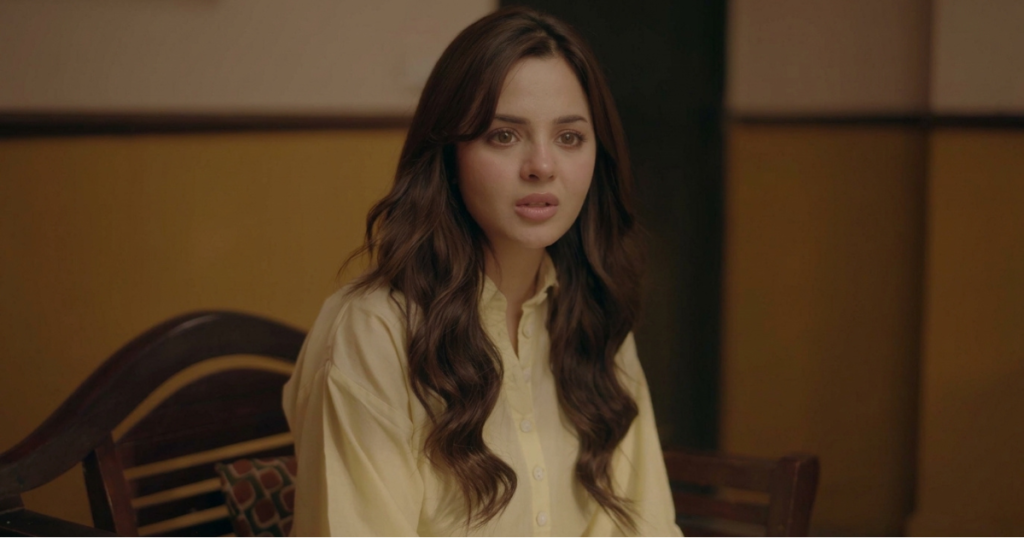
This is perhaps the most disturbing part of these episodes.
Sara wanted a baby, and Diya became the solution to that desire. But after Diya gives birth, Sara’s behaviour raises serious questions about the purpose of this entire arrangement.
We see Sara holding the baby and behaving as though she is the only mother who matters. She does not even allow Diya to meet her own daughter properly. It is heartbreaking because Diya is not simply someone who helped Sara fulfil her wish for a child. She is the baby’s mother.
Imagine being a young woman who has been married into a family, gone through pregnancy and childbirth, and then finds herself struggling to receive even the basic opportunity to be with her own child.
What makes this situation worse is that Sara seems to believe she has a greater claim over the baby. Her dominant behaviour is no longer limited to her relationship with Shehryar; it is now affecting Diya’s motherhood as well.
A child cannot become a reason to erase a mother’s identity.
Sara may have wanted to become a mother, but that does not give her the right to make Diya feel as though she has no place in her own daughter’s life.
Diya Is a Wife, Not Just a Woman Who Was Brought Into the House for a Baby
In our previous review, we discussed how Diya was chosen as a solution rather than being considered as an individual with her own emotions and expectations.
Unfortunately, these episodes make that concern even more evident.
Diya was a young girl whose studies were not even complete. Instead of allowing her to continue her education and experience life at her own pace, she was brought into a marriage that has become emotionally complicated from the beginning.
Now, she is struggling to receive the rights that should naturally come with being a wife.
She cannot freely spend time with her husband, and even her relationship with her own daughter seems to be controlled by Sara. Her education is also not receiving the support and cooperation she needs.
What kind of future was promised to Diya when this marriage was arranged?
Sara claimed that Diya would have a protective husband and a secure home. But a secure home is not simply a roof over someone’s head. It is a place where a person feels respected, valued and emotionally safe.
Diya deserves to be treated as Shehryar’s wife, not as someone who should remain grateful for being given a place in the house.
She also deserves to continue her studies, build her identity and enjoy motherhood without having to compete with Sara for the right to hold her own child.
Sharing a Husband Is Never as Easy as It Sounds
There is another reality that Gulbahar is exploring through Sara’s character: sharing a husband is emotionally difficult.
Sara may have imagined that she could manage the arrangement because she was the one who suggested it. Perhaps she thought that as long as Shehryar remained emotionally attached to her, everything else would fall into place.
But marriage does not work like an arrangement on paper.
Shehryar is Diya’s husband too. He has responsibilities towards her, and naturally, a husband and wife need time together to develop their relationship.
Sara seems to struggle with this reality. She wants Shehryar to fulfil the responsibilities of a husband towards Diya, but when he actually gives Diya attention, Sara becomes uncomfortable.
This is the contradiction at the heart of her character.
We can understand her insecurity. No woman should be expected to feel nothing when her husband marries someone else. But Sara cannot expect Diya to live without the emotional benefits of marriage simply because Sara is finding the arrangement difficult.
If Sara could not accept the reality of sharing her husband, perhaps she should have thought about it before arranging the marriage.
Shehryar Is Stuck Between Two Wives
Shehryar’s position is becoming increasingly complicated.
He has two wives, and both have expectations from him. He has to maintain a balance between Sara and Diya, but this balance is becoming harder because Sara’s behaviour is creating more tension.
We can see that Shehryar notices what is happening. He understands that Sara’s attitude towards Diya is not always fair, and he tries to manage the situation between them.
But how long can he keep doing this?
Being fair to two wives is not simply about dividing time or fulfilling household responsibilities. It also means recognising their individual rights, respecting their feelings and ensuring that neither woman is made to feel insignificant.
Shehryar cannot keep trying to protect Sara’s emotions at the expense of Diya’s rights.
At the same time, he needs to understand that his own decision to marry again has consequences. He cannot expect both women to adjust endlessly while he avoids confronting the actual problem.
The responsibility of maintaining this marriage does not belong to the women alone.
Sara’s Dominating Nature Is Becoming Difficult to Ignore
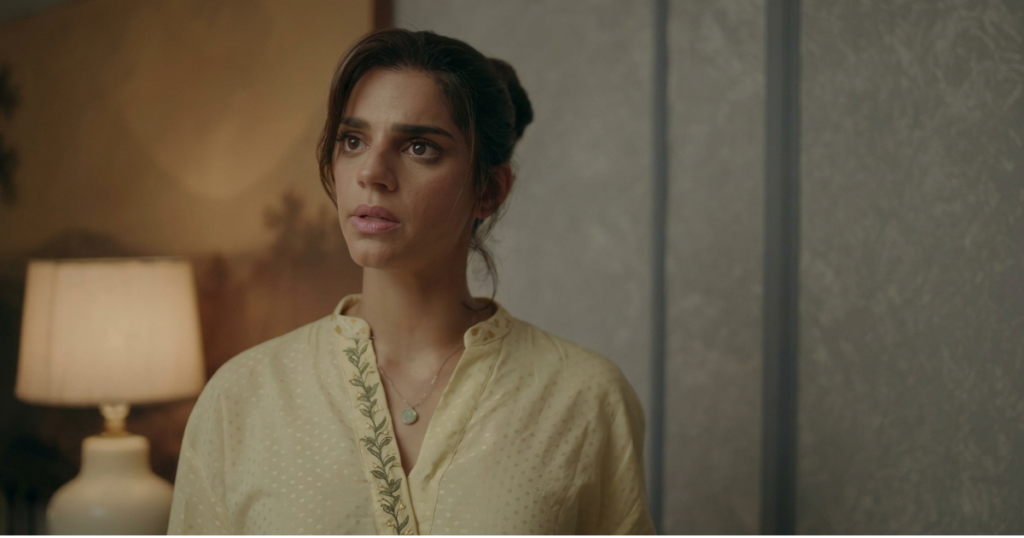
One thing these episodes make particularly clear is Sara’s dominant personality.
Earlier, we mostly saw her as a wife who wanted love, attention and reassurance from her husband. Now, we are seeing how strongly she wants control over the relationships around her.
She wants to decide how Shehryar interacts with Diya. She wants to control Diya’s place in the house. And now, she seems to be asserting her authority over the baby as well.
This is what makes her behaviour so disturbing.
Sara’s actions are not only hurting Diya; they are also putting Shehryar in an increasingly uncomfortable position. She seems to want the benefits of having Diya in the family without accepting that Diya has rights and expectations of her own.
There is a difference between being the first wife and having the authority to decide whether the second wife deserves to be treated like a wife.
Sara’s pain is real, but Diya’s pain is real too.
From Hamdardi to Control: What Happened to Sara’s Promise to Diya?
Perhaps the biggest disappointment is the contrast between Sara’s original intentions and her current behaviour.
She presented Diya’s marriage as an act of hamdardi. Diya had lost her parents, needed security and deserved someone who could protect her. Sara believed that bringing her into the family would give her a better life.
But kindness is not just about making decisions for someone. It is also about respecting their choices after those decisions have been made.
If Sara genuinely wanted to protect Diya, she would want her to have a happy marriage, continue her education, spend time with her husband and enjoy her relationship with her daughter.
Instead, Diya seems to be losing her independence and struggling for the most basic things.
This makes us question whether Sara ever considered Diya’s happiness beyond the purpose for which she was selected.
A woman cannot be treated as a solution to another woman’s problems and then expected to have no needs of her own.
Acting and Storytelling: When a Beautiful Story Becomes Uncomfortable
What makes this development interesting is that Gulbahar is not relying on a simple conflict between two wives. It is showing how a decision made with seemingly good intentions can create an emotionally complicated situation.
Sanam Saeed’s portrayal of Sara makes her changing behaviour particularly noticeable. Her character is no longer simply the wife we felt sorry for. There is insecurity, jealousy and a growing need for control beneath her actions.
Emmad Irfani’s Shehryar is caught between his responsibilities towards both women. His attempts to maintain balance are important, but the story also needs to show him taking a clearer stand when one wife’s rights are being compromised.
Komal Meer’s Diya represents the vulnerable side of this arrangement. She entered the marriage as a young girl with her own future ahead of her, but she now has to navigate a complicated household where even her position as a wife and mother is not being fully respected.
The writing has taken the story into an uncomfortable territory, and that is not necessarily a bad thing. A drama does not always have to make its audience happy. Sometimes, it needs to make us question the characters and the decisions they make.
Final Verdict: Gulbahar Is Making Us Question Sara’s Real Intentions
Gulbahar episode 14, 15 and 16 have changed the way we look at Sara.
Initially, we sympathised with her because of Shehryar’s behaviour. We understood her emotional struggles and even saw her decision to arrange a second marriage as an unusual attempt to solve a difficult family situation.
But now, we are seeing the consequences of that decision through Diya’s eyes.
Sara wanted a second wife for Shehryar, but she does not seem ready to accept Diya as an actual wife. She wanted a baby, but Diya’s identity as the child’s mother is being pushed aside. She promised Diya protection, but Diya is struggling for her own rights within the very home that was supposed to protect her.
The question is no longer whether Sara is hurt. Of course, she is. The real question is whether her pain gives her the right to hurt someone who was brought into this situation by her own decision.
We hope Shehryar takes a stronger stand, Diya gets the respect and freedom she deserves, and Sara finally understands that she cannot control every part of a relationship simply because she was the one who initiated it.
A marriage cannot be fair when one woman is expected to sacrifice everything so the other can feel secure.
And that is what makes the latest episodes of Gulbahar so disturbing.
In our Gulbahar Episode 11 and 12 review, we discussed Sara’s decision to choose Diya as Shehryar’s second wife, her growing insecurity and Diya’s right to a genuine marital relationship. The latest episodes show how those concerns are now turning into a much bigger problem.
Watch Gulbahar on HUM TV for the latest episodes and follow Sara, Shehryar and Diya’s complicated relationship as the story unfolds.
