
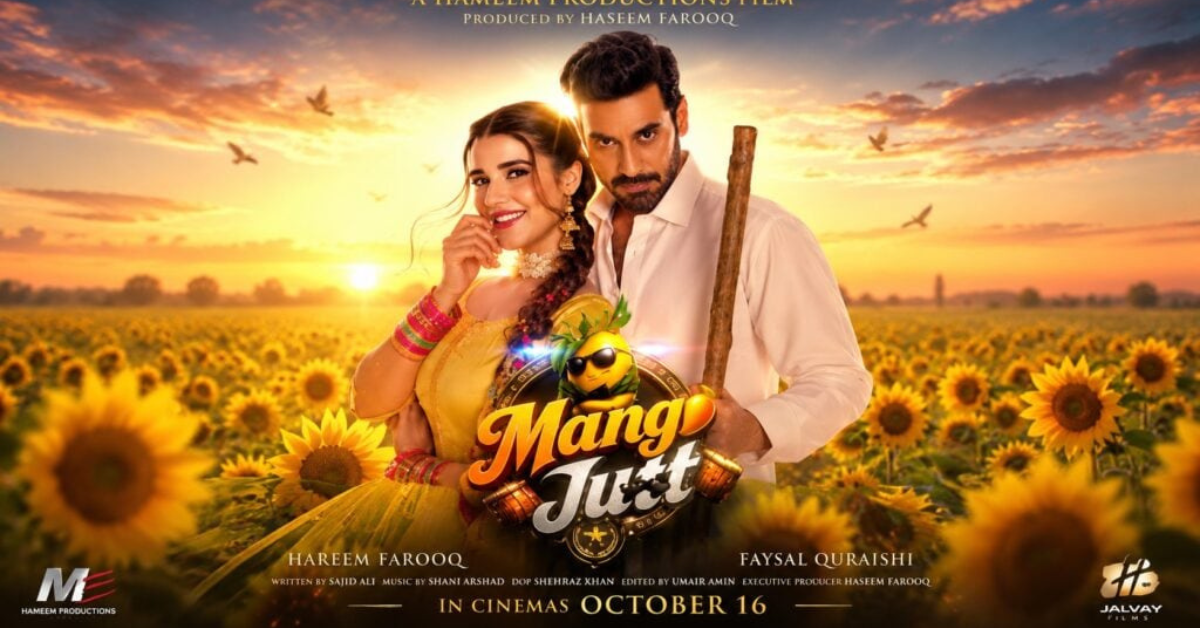
Pakistani cinema needs films that entertain audiences while giving them a reason to return to cinemas. With comedy, romance, action and a familiar Punjabi flavour, Mango Jutt arrives with all the ingredients of a commercial entertainer. But does it manage to bring everything together into a satisfying film?
Starring Faysal Quraishi and Hareem Farooq, Mango Jutt follows a police officer who takes on an undercover mission while dealing with family responsibilities and an unexpected romance. The film promises humour, action, music and emotional moments, making it an attempt to appeal to a broad audience.
However, having all the ingredients of an entertaining film does not necessarily guarantee a memorable cinematic experience. While the cast brings energy to the screen and the Punjabi flavour gives the film its identity, the storytelling and execution leave plenty of room for improvement.
In this Mango Jutt movie review, we look at the story, performances, comedy, romance, music and the reasons the film struggles to reach its full potential.
Mango Jutt Story: What Is the Film About?
The story revolves around Murad Jutt, played by Faysal Quraishi, a police officer whose routine changes after a family tragedy. His sister, Mariam, asks him to look after her three children in Lahore following the death of her husband.
Murad’s family responsibilities soon overlap with his professional life. His superior assigns him an undercover mission to track down a dangerous criminal involved in a land-grabbing operation. To carry out the assignment, Murad adopts a new identity, giving the film an opportunity to explore the comic situations that arise when a police officer attempts to blend in as an ordinary man.
His visits to the children’s school bring him into contact with Noor Jehan, played by Hareem Farooq. Noor is the school principal and a friend of Mariam, and the connection between her and Murad gradually develops into a romantic storyline.
Meanwhile, the criminal threat grows, with the children’s safety becoming part of the larger conflict. This gives the film several storylines to manage: Murad’s police mission, his responsibilities as an uncle, his growing relationship with Noor, and the danger posed by the antagonist.
On paper, the setup offers plenty of possibilities. There is room for situational comedy, suspense, family emotions and romance. The undercover identity could also have created a stronger connection between the film’s humour and its central conflict.
The difficulty lies in bringing these elements together. A film can have a simple story and still be thoroughly enjoyable, but the narrative needs to feel connected. When individual scenes appear to exist mainly to deliver a joke, song or fight, the overall experience can feel fragmented.
Faysal Quraishi as Murad Jutt: The Film’s Biggest Strength

Faysal Quraishi is one of the most recognisable performers in Pakistani entertainment, and his experience gives him an advantage in a role that demands comic timing, physical energy and an engaging screen presence.
Murad Jutt is designed as a larger-than-life character who can move between action, humour and romance. Quraishi appears comfortable with this style, bringing a lively performance to the role and giving the character much of the personality that keeps the film moving.
The character’s undercover identity also creates opportunities for exaggerated reactions and playful dialogue. These moments depend heavily on the actor’s delivery, especially when the humour is more about performance than an unexpected twist in the story.
Quraishi’s screen presence helps make the film watchable even when the material feels familiar. He understands the broad commercial style the film is aiming for and commits to the character rather than playing everything too cautiously.
However, even an experienced actor needs a screenplay that gives the character meaningful development. A strong performance can make a scene entertaining, but it cannot always compensate for predictable situations or a storyline that lacks focus.
Murad could have been a more memorable character if the film had explored the contrast between his disciplined professional life and his new family responsibilities in greater depth. That contrast offers genuine potential for comedy as well as emotional growth.
Hareem Farooq Brings Romance and Emotion

Hareem Farooq plays Noor Jehan, the school principal who becomes Murad’s romantic interest. Her role gives the film a softer dimension, balancing the action and comedy with a developing relationship.
Farooq also serves as the film’s producer, making her involvement in the project extend beyond her performance. On screen, she brings a familiar romantic presence to the story, and her pairing with Quraishi provides the film with a recognisable commercial combination.
The romance works best when it allows the characters to interact naturally rather than simply moving them towards the expected conclusion. Small exchanges, contrasting personalities and believable reactions can make a familiar love story feel fresh.
The challenge is that Noor Jehan needs more than a romantic connection to become a fully engaging character. Her own motivations, personality and place in the story deserve enough attention to make her feel like an individual rather than simply the heroine opposite the lead actor.
There is potential in the pairing, but stronger character development could have given their relationship more emotional weight. Audiences may enjoy watching two familiar performers share the screen, yet chemistry alone cannot create a compelling romantic arc.
Shamoon Abbasi and the Supporting Cast
A commercial entertainer depends on more than its leading pair. Supporting characters provide the situations, conflicts and comic moments that give the central story variety.
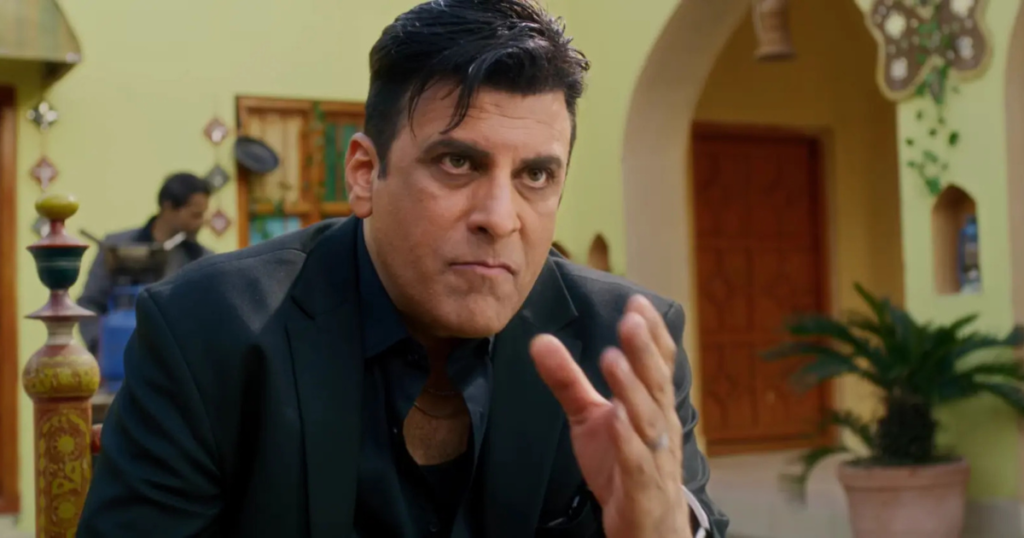
Shamoon Abbasi plays the antagonist, whose criminal activities create the danger around Murad’s mission. A convincing villain is particularly important in a film that mixes comedy with action. If the threat feels real, the audience has a reason to remain invested even when the surrounding scenes are playful.
However, a villain’s impact depends on the writing as much as the performance. Strong dialogue, clear motivations and a sense of strategy can turn an antagonist into a memorable presence. When these elements are underdeveloped, the character risks becoming another familiar obstacle for the hero to overcome.
The supporting cast also includes performers known for comedy, including Qaiser Piya and Honey Albela, alongside Ayesha Jahanzeb and other cast members. Their presence helps establish the film’s broad, accessible tone.
Comedy performers can add considerable value to a Punjabi entertainer, particularly when the script gives them well-written exchanges and situations that suit their individual strengths. The missed opportunity here is the possibility of using the supporting characters to deepen the story instead of relying primarily on their arrival for another comic moment.
A more balanced screenplay could have made the supporting cast feel essential to the plot while giving each character a clearer purpose.
Punjabi Comedy: Does Mango Jutt Get the Laughs Right?
Punjabi humour has a distinct appeal. The language, expressions, delivery and larger-than-life personalities can turn ordinary situations into memorable comic moments. For many Pakistani viewers, this style of comedy is part of the pleasure of watching a Punjabi film.
Mango Jutt leans into that tradition, using playful dialogue, exaggerated performances and familiar comic situations to keep the tone light. The film clearly aims to offer an accessible cinema experience rather than a serious crime drama.
The problem is that comedy requires timing and variety. A joke can work because of an actor’s expression, an unexpected response or the way a scene develops. But when the same kind of humour is repeated without adding anything new, the effect can become predictable.
The undercover premise could have been a particularly effective source of comedy. Murad has to maintain a false identity while dealing with a criminal investigation and looking after children. These responsibilities naturally create opportunities for misunderstandings, awkward situations and conflicts between his personal and professional lives.
A stronger script could have used these circumstances to generate humour organically. Instead of relying on isolated comic scenes, the film could have allowed the comedy to grow directly out of the central plot.
For audiences who enjoy broad Punjabi humour, some moments may still land. But the film could have achieved a much stronger result by giving its jokes more variety and allowing comic situations to develop rather than rushing towards the next punchline.
Music and Romance Add Commercial Appeal
Music is an important part of the identity of many Pakistani commercial films, particularly those drawing on Punjabi cinema traditions. Songs can establish a mood, build romantic chemistry or turn a celebration into a memorable sequence.
Mango Jutt brings music into its mix of romance, comedy and action. Tracks associated with the film include familiar Lollywood influences, giving it a recognisable cultural flavour. The soundtrack offers moments that can appeal to viewers who enjoy energetic songs and a traditional commercial-cinema atmosphere.
The film’s musical identity is not the problem in itself. In fact, a well-placed song can add energy and give the audience a welcome change of pace. The issue is how naturally it fits into the narrative.
When a song emerges from a situation the audience understands, it can strengthen the emotion or excitement of the scene. When its placement feels disconnected from the story, however, it can interrupt the momentum.
The same applies to romance. Music can help establish a relationship, but it cannot replace the character interactions that make viewers care about the couple.
A more carefully structured film could have connected its songs, romantic moments and main plot more effectively. This would have helped the soundtrack feel like part of the storytelling rather than a separate attraction.
Action and the Undercover Plot Needed More Focus
The criminal investigation gives Mango Jutt a central conflict beyond its comedy and romance. Murad’s mission requires him to investigate a dangerous individual while maintaining his cover, creating the possibility of suspense alongside the humour.
This combination can work well. A lighthearted hero can still face serious stakes, and the contrast between comic situations and genuine danger can make both elements more effective.
For that balance to work, the investigation needs to remain clear. The audience should understand what Murad is trying to achieve, what obstacles stand in his way and why his decisions matter.
When important developments are rushed or insufficiently explained, suspense loses its impact. The action may still look energetic, but viewers can struggle to feel invested in the outcome.
The same principle applies to the family storyline. The children’s safety should create emotional stakes that connect naturally with Murad’s professional mission. If these threads are developed together, the film’s different genres can strengthen one another.
Mango Jutt has a premise that could support this balance, but a more focused screenplay would have made the investigation feel more engaging and the action more consequential.
Where Mango Jutt Falls Short: Storytelling and Editing
The biggest weakness is the way the film brings its many elements together.
A commercial entertainer does not need a complicated plot, and audiences do not necessarily expect every Punjabi comedy to offer a serious social message. What they do expect is a story that keeps moving, characters worth following and entertainment that feels well put together.
The film’s familiar developments make some moments easy to anticipate. Its multiple storylines also compete for attention, and not every scene contributes equally to the central narrative.
Editing plays a significant role here. A tighter edit can improve pacing, remove unnecessary detours and make transitions between comedy, romance and action feel natural. Even a straightforward story can become engaging when its scenes are arranged with precision.
The screenplay also needs to establish clear connections between its events. When a plot point appears without enough preparation or a side storyline receives more attention than it needs, the film risks losing its rhythm.
These issues matter because the film already has several advantages: an experienced lead actor, a recognisable romantic pairing, a Punjabi setting and a cast suited to commercial entertainment.
The problem is not a lack of ingredients. It is the need for stronger coordination between them. More disciplined writing and editing could have helped the performances shine while giving the audience a smoother, more satisfying experience.
Public Reaction: Why Viewers Are Divided
The initial response to Mango Jutt has been mixed, with criticism directed at its story, editing and overall execution. Some viewers have expressed disappointment, while the film’s familiar commercial style may appeal to those who prefer uncomplicated entertainment.
This difference in expectations is worth considering. One audience member may go to the cinema primarily for comedy, songs and familiar performers. Another may expect a carefully developed story with believable character arcs and a convincing resolution.
Neither expectation is unreasonable. A film can aim to entertain a broad audience, but it still needs enough narrative structure to keep viewers engaged.
Public reaction also reflects a wider conversation about Pakistani cinema. Local films need audiences willing to support them, but viewers also want their time and money to feel well spent. Encouraging people to watch Pakistani films and expecting strong storytelling are not opposing positions.
A healthier cinema culture depends on both audience support and constructive criticism. Praising a film simply because it is locally produced does not help filmmakers improve, just as dismissing every commercial entertainer for being lighthearted ignores the variety of experiences cinema can offer.
Ultimately, this Mango Jutt movie review looks beyond the star cast to assess the storytelling, entertainment value and overall execution.
Final Verdict: Is Mango Jutt Worth Watching?
Our Mango Jutt movie review comes down to one central point: the film has commercial potential, but its execution does not consistently match its ambitions.
Faysal Quraishi brings energy and personality to Murad Jutt, while Hareem Farooq contributes to the romantic storyline. The Punjabi humour, music and action provide familiar attractions for audiences looking for a mainstream cinema experience.
However, predictable developments, uneven storytelling and pacing issues prevent the film from reaching its full potential. The undercover premise could have generated more inventive comedy, the romance could have benefited from deeper character development, and the action could have carried greater weight if the central conflict had been developed more clearly.
Should you watch Mango Jutt? If you enjoy Punjabi commercial films, familiar humour and a mix of romance and action, you may find moments to enjoy. If you prioritise a tightly written story, well-developed characters and seamless editing, you may find the overall experience disappointing.
The film serves as a reminder that recognisable stars and familiar commercial ingredients can attract attention, but they are not substitutes for strong storytelling. Pakistani cinema has plenty of room for lighthearted entertainers; the real opportunity is to make those films as engaging and well-crafted as possible.
Mango Jutt has the ingredients of a crowd-pleaser, but a stronger script and more focused execution could have made it a far more memorable film.
For more details about the film, including its cast and credits, visit Mango Jutt on IMDb.
If you enjoy Pakistani entertainment reviews, read our Rutba review of episodes 1 to 3. You can also explore our reviews of Dar e Nijat episodes 22 and 23 and Mitti De Baway episodes 7 and 8.
