

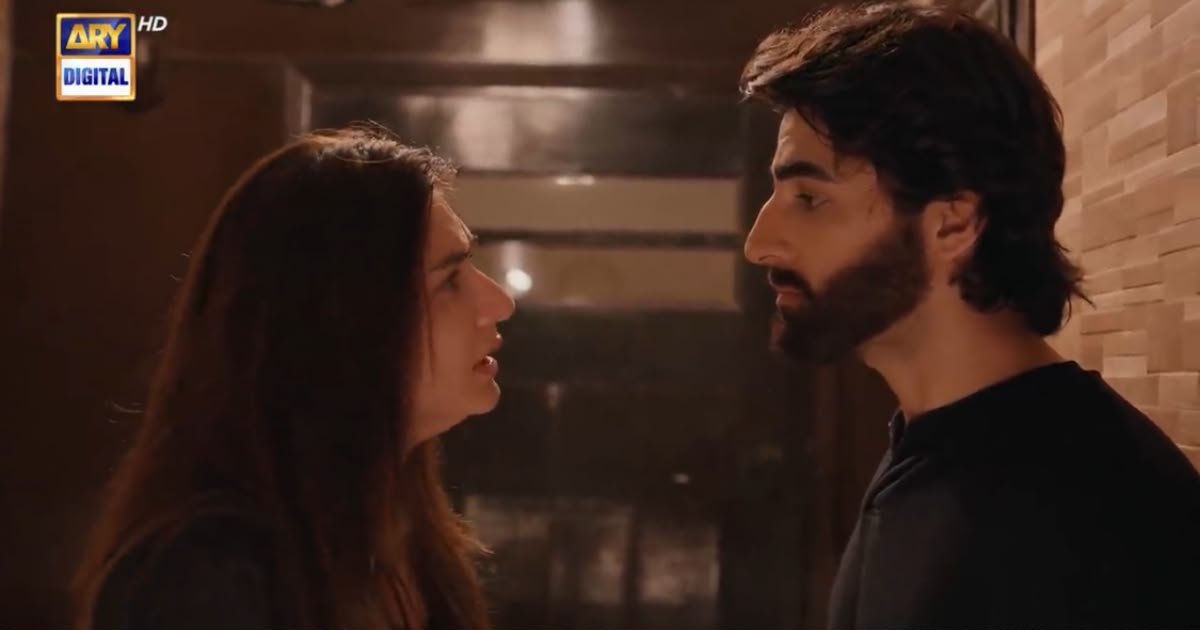
Some breakups hurt because love ends.
Others hurt because one person decides that the entire history of the relationship suddenly means something different.
That is what makes the latest episode of Dar-e-Nijaat so difficult to watch.
Zamil does not simply tell Zaryab that he has moved on. He tells her that the years they spent together belonged to an “era of ignorance.” He tells her that he has repented, that he has changed, and that he now wants a wife who is pure, modest, innocent, and obedient.
Then Zaryab asks the question that cuts to the heart of everything:
Couldn’t she have changed too?
Zamil’s answer is essentially no.
And that is where the conversation stops being simply about a man finding religion. It becomes a much more uncomfortable question about who gets to change, who gets forgiven, and who gets permanently defined by their past.
Zamil has every right to change his life.
He has every right to become more religious.
He has every right to decide what kind of marriage he wants.
But the latest episode raises another question: Does personal transformation give someone the right to place the entire burden of a shared past on the person they once loved?
For Zaryab, the answer is devastating.
Zamil Put the Blame on Zaryab for a Relationship He Helped Build
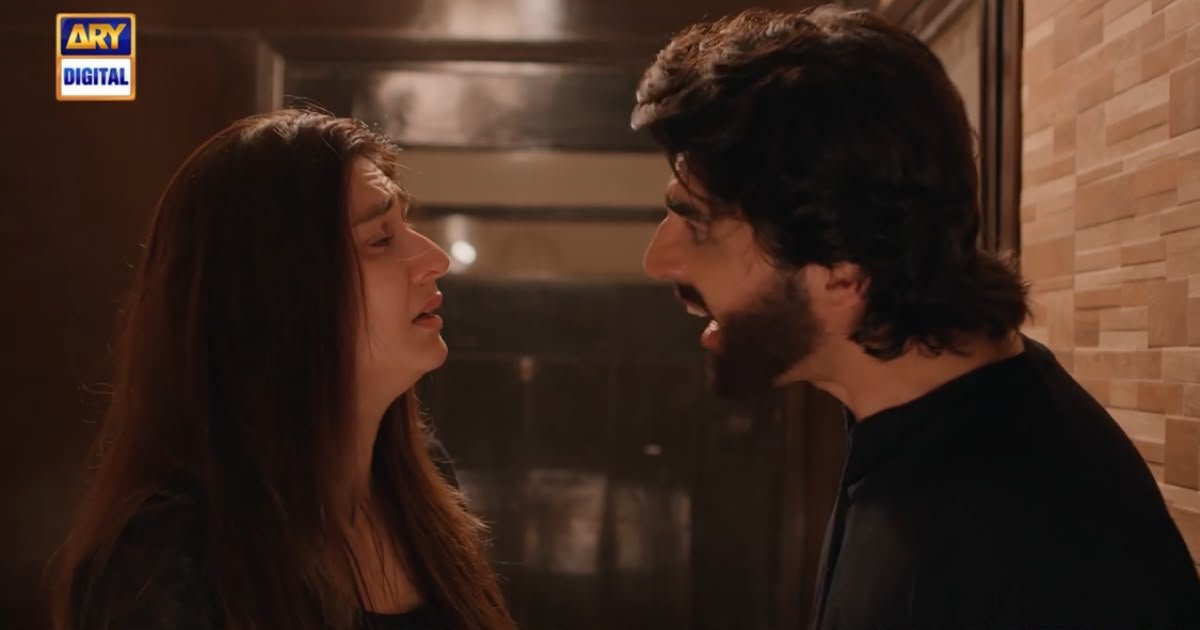
The cruelty of Zamil’s conversation with Zaryab lies partly in how selectively he remembers their relationship.
For years, he was not an unwilling participant in their story.
He loved her. He lived that relationship with her. He shared intimacy with her. He made choices alongside her.
Yet after his spiritual transformation, he begins describing that same period as a life he has left behind.
Zaryab, however, is still standing inside that history.
She has not been given the luxury of rewriting it.
When she finally gets the chance to confront him, Zamil tells her that whatever existed between them is over. He explains that the time he spent with her belonged to his “era of ignorance” and that he has now moved forward.
But what happens to the other person who lived through that same “era”?
That is where Zaryab’s heartbreak becomes bigger than simply losing Zamil.
She is being told that the relationship she believed was real has suddenly become evidence of everything he now wants to reject.
And worse, she is being made to feel responsible for a chapter that both of them wrote.
Zamil’s argument repeatedly shifts the focus toward Zaryab’s character.
He says he wants a woman with good character and faith. Someone pure. Someone modest. Someone who has never been seen by another man.
The implication is painfully clear.
Zaryab is being judged not simply for who she is now, but for what she and Zamil themselves did together.
That is the contradiction at the heart of their entire confrontation.
“Kya Sirf Mardon Ko Tauba Ka Haq Hai?”
This is the question that changes the conversation.
Zaryab asks him, in essence:
“So only a man has the right to repent? Not a woman?”
Then comes the question that makes the scene even more painful:
“Kya main naik nahi ban sakti thi?”
Could she not have become good?
Could she not have changed?
Could she not have repented?
Her questions are no longer really about convincing Zamil to take her back.
They are about understanding why the door of redemption seems to be open for him but permanently closed for her.
She even tells him that if he had explained what he wanted from her, she would have changed.
“Tum kehte toh main sab kuch kar sakti thi.”
That sentence says everything about how deeply Zaryab had tied herself to Zamil.
She is not arguing that she was perfect.
She is not denying her past.
She is saying:
You could have told me.
You changed.
Why couldn’t I?
And that is precisely where Zamil’s transformation begins to feel less like a shared journey toward something better and more like a private decision in which Zaryab was never given a chance to participate.
He had already decided what she represented.
His past.
His mistakes.
His “era of ignorance.”
The woman he could no longer take with him into the life he had imagined.
He Called Their Years Together His “Era of Ignorance” Then Used Their Past Against Her
There is something particularly harsh about calling a relationship an “era of ignorance” when the person standing in front of you experienced every part of it with you.
Zamil’s repentance is personal.
But his language makes it relational.
He does not simply say, I made mistakes.
He effectively says:
I made those mistakes with you, and now those mistakes make you unsuitable for my future.
That distinction matters.
The episode makes it clear that Zamil and Zaryab were physically intimate. Zamil himself reminds her that whatever happened between them happened with her consent.
On the surface, it is his defence.
He is trying to establish that he did not force her.
But emotionally, the argument lands very differently.
Because he is using their mutual past to defend himself while simultaneously using that same past to disqualify her from the future he wants.
That is why Zaryab’s questions become so painful.
If both of them participated in that past, why is only one of them being permanently marked by it?
If Zamil can say, I didn’t know then, but I know now, why can’t Zaryab say the same?
The episode does not need a long lecture to make the contradiction visible.
The conversation does it for us.
Zamil Wanted a “Pure” Wife — But What Did He Expect From Zaryab?
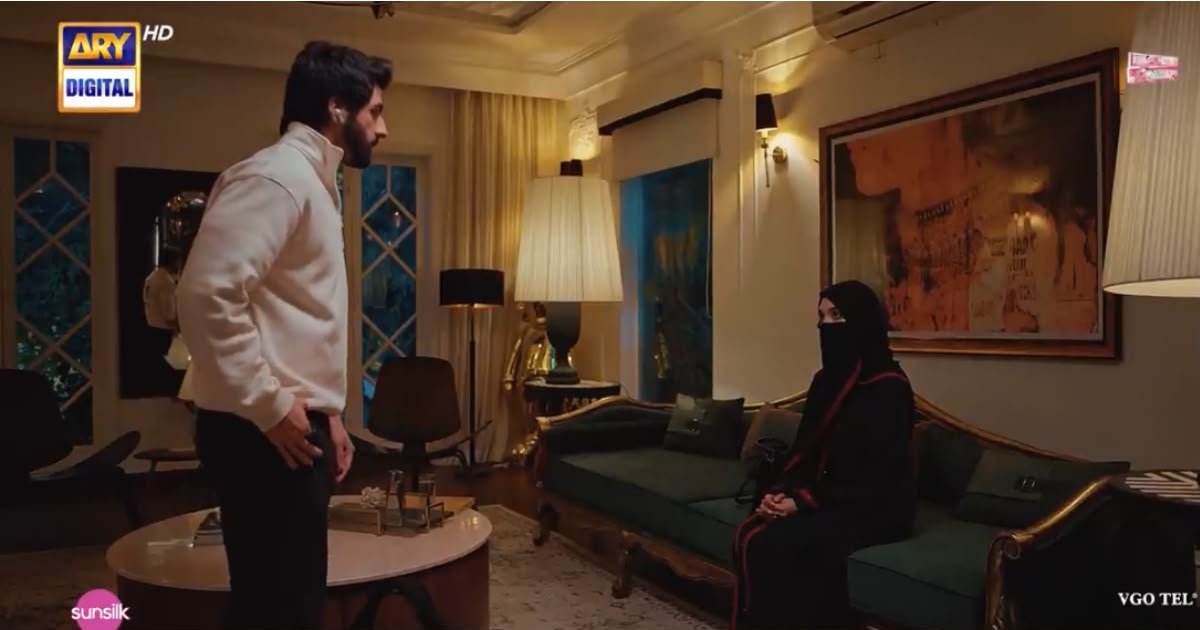
Zamil’s description of his ideal wife is perhaps the most revealing part of the entire scene.
He wants someone who will listen to him.
Someone obedient.
Someone simple.
Someone who will take care of his home and children.
And, above all, someone whose character has never been “stained.”
That idea changes the emotional temperature of the scene.
Because Zaryab is not asking him to ignore her past.
She is asking whether her past makes her permanently unworthy of becoming something different.
Zamil’s answer suggests that, in his mind, there is one category of woman he now wants and another category to which Zaryab belongs.
The tragedy is that he once loved the woman standing in front of him.
He once called her his biggest weakness.
He once shared a life with her.
Now he is presenting her as fundamentally incompatible with the life he wants.
And the most uncomfortable part is that his definition of the ideal wife is not merely about faith.
It is also about control.
He does not just want a practising woman.
He wants a woman who will listen to him and not argue with him.
That makes his earlier fantasy of an “obedient girl” suddenly much more significant.
Zaryab laughed when he said it.
She trusted him enough to think it was harmless.
Now that same statement looks like a warning she never understood.
Zaryab Was Willing to Change, But Zamil Had Already Decided She Couldn’t
Perhaps the saddest thing about Zaryab in this episode is that she is still trying to negotiate.
Not for her relationship.
For her worth.
She tells Zamil that she could have changed if he had asked her.
She asks whether she could have become pious.
She asks whether she could have become a better person.
She is essentially saying:
Why didn’t you give me the chance you gave yourself?
And Zamil does not really answer that question.
Instead, he tells her that they are now two different people from two different worlds.
That may be true.
People change.
Relationships can become incompatible.
But incompatibility does not require humiliation.
Zamil could have ended the relationship.
He could have told her that he had changed and could no longer continue.
He could have acknowledged their shared history without turning it into evidence against her.
Instead, he frames himself as someone who has moved toward purity and Zaryab as someone who belongs to the life he has escaped.
That is what makes the scene so painful.
Zaryab does not just lose the man she loves.
She loses the version of their past she thought they both understood.
Abu Bakar Represents the Kind of Change Zamil Thinks He Has Achieved
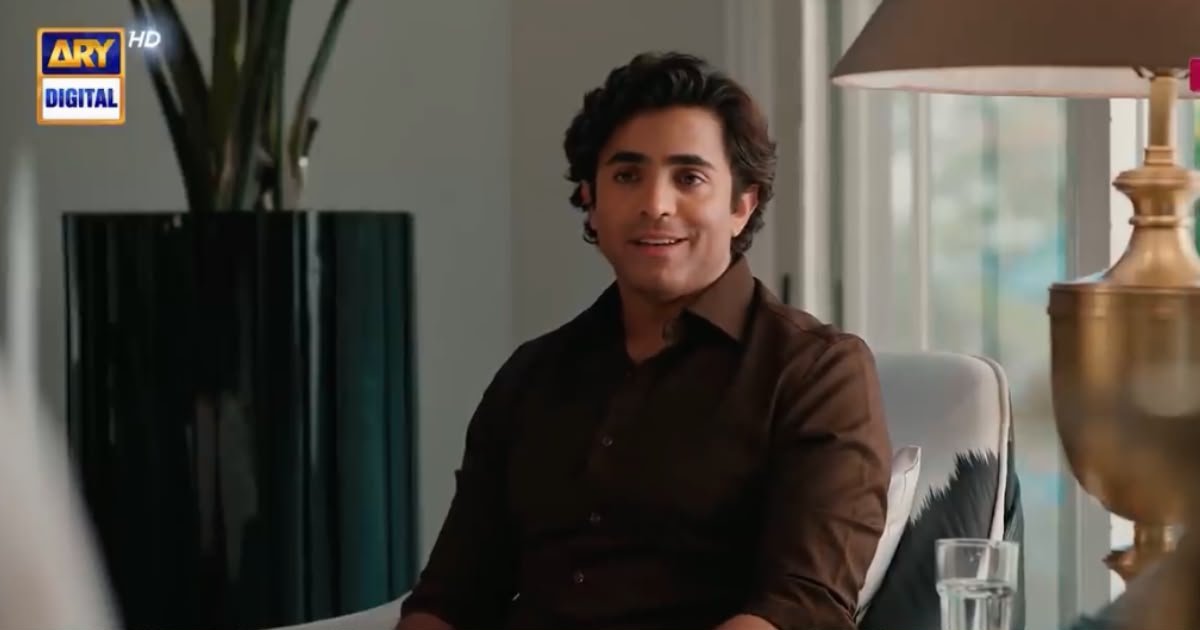
This is where Abu Bakar becomes important—not as Zaryab’s replacement, and not simply as the “better man,” but as an idealistic contrast within the story.
The drama presents two very different relationships with faith.
Zamil’s transformation is increasingly visible through the way he talks about other people.
He has become more concerned with judging, categorising, and defining what kind of person belongs in his new life.
Abu Bakar, meanwhile, has generally been presented through his conduct.
His faith is quieter.
His confidence does not seem dependent on making someone else feel smaller.
His choices have been shaped by restraint, responsibility, and boundaries rather than constant declarations of superiority.
That contrast matters because Dar-e-Nijaat does not need to make religion the problem.
The more interesting question is what a person does with the values they claim to have found.
Faith can produce humility.
It can produce patience.
It can make someone more conscious of their own mistakes.
Or, if filtered through ego, it can become another way of measuring everyone else.
Abu Bakar represents the first possibility.
Zamil is currently struggling with the second.
And that makes Abu Bakar useful to the story without turning him into a romantic solution for Zaryab.
“Insaan Do Baar Nahi Mar Sakta” Zaryab’s Final Line Says It All

By the end of the conversation, Zaryab has moved beyond arguing.
She asks him one final question through the language of devastation.
She says she will not die twice.
Then comes the line that may become the defining dialogue of this entire track:
“Insaan do baar nahi mar sakta. Tumne mujhe zinda gar diya.”
A person cannot die twice.
You buried me alive.
It is a devastating description of what Zamil’s rejection has done to her.
Because Zaryab has already lost him once.
She lost him emotionally when he began changing without her.
She lost him again when she discovered that he had returned to Pakistan and married someone else.
And now she is standing in front of him, hearing that the years they shared are being reduced to something he wants to forget.
Her pain is not simply:
I lost my love.
It is:
You made me live through the loss while you walked away believing you had been saved.
That is why the scene works.
It does not need Zaryab to scream.
It does not need a dramatic revenge speech.
Her final words are enough.
Zamil has changed.
That much is clear within the story.
But Dar-e-Nijaat has now given us a much more interesting question than whether his transformation is genuine:
What did his transformation cost the person he left behind?
He found a new direction.
Zaryab lost hers.
He found repentance.
She was left wondering whether repentance was ever available to her.
He found a new wife who, in his eyes, represents purity and faith.
Zaryab was left carrying the history they created together.
And that imbalance is what makes the latest episode so powerful.
The story does not have to say that Zamil is wrong for wanting to become religious.
It has to examine what happens when a person uses their new identity to erase accountability for their old one.
Because genuine change should not require pretending that the past never happened.
It should require confronting it.
Zamil’s greatest test may therefore not be whether he can remain committed to his new life.
It may be whether he can eventually look back at the way he treated Zaryab and accept responsibility without turning her into the villain of his old life.
And Zaryab’s journey may be even more important.
For so long, she believed that if she loved Zamil enough, waited long enough, and adjusted herself enough, their story would eventually work.
Now she has been forced to confront the possibility that she was never supposed to spend her entire life trying to become worthy of someone’s love.
Perhaps the real tragedy of this episode is not that Zamil chose another woman.
It is that he convinced Zaryab that she was somehow disqualified from becoming a better version of herself.
And perhaps that is the question Dar-e-Nijaat should carry forward:
If redemption is truly about becoming better, why should it ever belong to one person and not the other?
Zamil has chosen his new life.
Now Zaryab has to find hers.
And after everything he has said to her, that may be the first choice in this story that truly belongs to her.
