








Mitti De Baway Review: A Bold, Cinematic Beginning
This Mitti De Baway review starts where most dramas wouldn’t dare, with the ending. Most Pakistani dramas take their time. Mitti De Baway just doesn’t play that game.
Within minutes of episode one, we get a jail release, a graveyard shootout, and what looks like the death of the male lead. That’s a wild way to open a show, and it tells you straight away this drama isn’t here to slow burn its way into your heart. It wants to grab you first and explain everything later.
The Love Story Behind It All
Here’s the setup. Bano comes from a respected family in Wazirabad. Baala is a dhol player from Mitranwali. They fall hard for each other, but family honor gets in the way, and Bano ends up choosing her family over him, leaving Baala completely heartbroken.
Years later, life brings them back together in Faisalabad. Both are married now, both have kids, but that old feeling never really left. Fear, resentment and revenge end up pulling them apart all over again. Then fate does it a third time, throws them back together despite old rivalries, betrayal and family drama standing in the way. They finally forgive each other and accept the love they could never really escape, but an old enemy shows up and turns their long awaited reunion into a tragedy.
Mitti De Baway is basically a love that survives everything life throws at it, only to lose to fate in the end.
Produced by: Tehreem Chaudhary
Directed by: Syed Wajahat Hussain
Written by: Faiza Iftikhar
This Mitti De Baway review covers the first two episodes, and honestly, there’s a lot to unpack beyond just the plot. The visuals, the Punjabi culture on full display, the cast, the way the story jumps around in time. Let’s get into it.
Three Timelines, One Story
Mitti De Baway doesn’t tell its story straight. Episode one opens in 1999, with Baala Gujarati walking out of Kot Lakhpat Jail to a crowd chanting his name like he’s a local legend. That celebration barely gets a breath before the show cuts to a graveyard where an ambush leaves people dead, and Baala apparently among them, all on Billo’s orders.
Then the drama rewinds. We land in 1996 Faisalabad, where a grown up Iqbal Channan, known to everyone as Baala, is juggling a demanding household and a shady business rival. Then it rewinds even further to 1980 Mitranwali, where a young Baala, born into a family of traveling musicians, first crosses paths with a young woman by the river.
Jumping between three timelines this early is a big swing. But once you know Bano and Baala are meant to find and lose each other three times over, it clicks. This isn’t a “will they end up together” story. It’s a “how many times can fate throw them back together before something finally breaks it for good” story.
What Actually Happens in Episodes 1 and 2
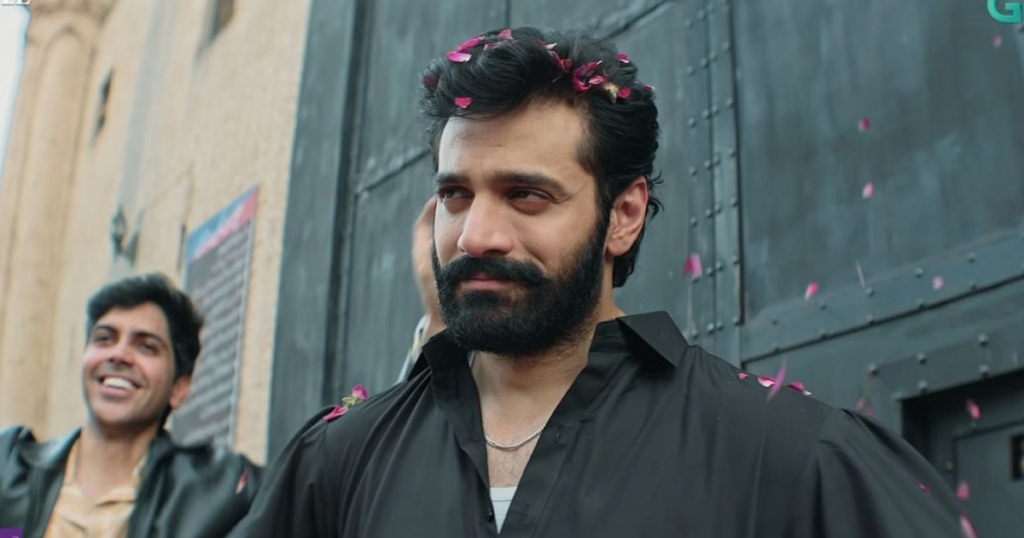
The opening hits hard. Baala’s release from jail feels like a hero’s homecoming, the whole crowd chanting his name. Then boom, graveyard ambush, and Billo is the one who ordered it.
Mitti De Baway airs on Green Entertainment, and it wastes no time getting to the point
Then we rewind to Mitranwali. Young Baala would rather sneak off to watch a film shoot than do his family duty, and his dad is not having it. There’s a great, very real line where his father snaps at him for wanting to act instead of playing music like the rest of the family: “Playing music is our livelihood. We won’t do any other work.” It’s a small line, but it says everything about the world Baala grew up in, tradition over dreams, always.
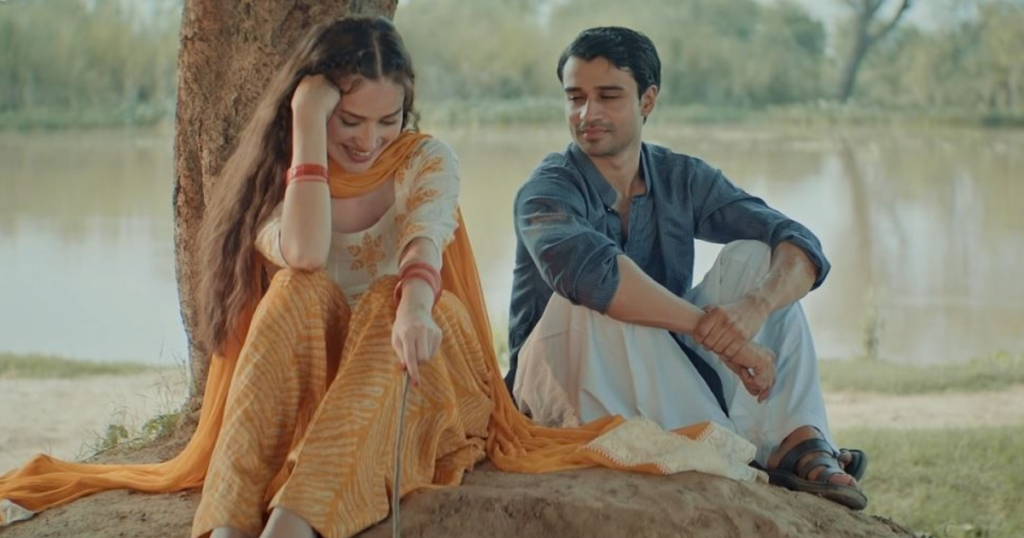
It’s at that same film shoot that Baala meets a young woman by the river, all flirty energy and stolen glances, only for us to find out fast that she’s already engaged, her marriage arranged into a bigger, wealthier family without anyone asking her what she wants. That single detail already sets up the family honor conflict the whole story is built on.
Meanwhile in Faisalabad, grown up Iqbal is dealing with a full household, in laws, a business dispute that gets physical, and a sick wife he’s desperate to get a blessing for. That’s where we meet Bilqees Bano, the Shah family’s daughter-in-law, known across the community for her prayers and her healing touch. Composed, respected, and clearly carrying a very different energy than the girl we saw laughing by the river.
By the end of episode two, you can feel all these threads getting ready to collide, the young romance, the arranged marriage, the business drama, and the spiritual household. We don’t have the full picture yet of how a sweet young love story turns into a woman ordering her ex’s execution, but the pieces are being placed carefully.
The Aqeeqa Scene Was Pure Punjab
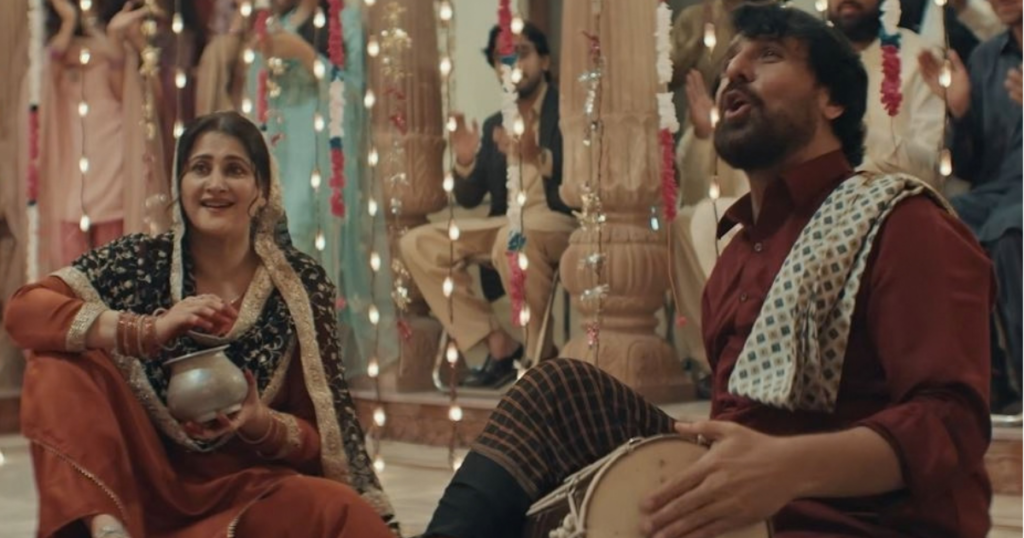
One of the warmest, most cultural moments in these two episodes happens when Baala’s family, who are professional dhol players and singers, get called to perform at someone’s aqeeqa celebration in the city. It’s just another gig for them, dhol beats, singing, the usual routine. Except this particular event is where Baala first lays eyes on Billo, and that’s where their whole story actually begins.
There’s something poetic about that. A random performance job turns into the moment that changes both their lives. The scene itself is shot beautifully too, real dhol, real energy, the kind of unfiltered Punjabi celebration you don’t often get to see done justice on screen. It’s not just a cultural flex for the drama, it’s actually doing double duty as the meet cute that kicks off the entire love story.
It’s a small scene in the grand scheme of things, but it might be one of the most memorable, because it captures something Pakistani dramas rarely bother showing properly: real, joyful Punjabi culture, not a watered down version of it, and it earns its place in the story instead of just being there for atmosphere
The Production Value Is On Another Level
Whatever else this Mitti De Baway review covers, everyone online agrees on one thing first, this show looks expensive, in the best way. The production quality feels more like a film than a TV drama, and that’s genuinely rare for an opening episode in Pakistani television.
The graveyard ambush is shot with a scale and intensity you don’t usually see this early in a season. The jail release scene before it builds real atmosphere just through crowd energy and sound, before a single dramatic line is even spoken. And the locations, Mitranwali and Faisalabad, feel specific and real rather than generic sets standing in for “rural Pakistan.” That attention to detail makes the whole story feel grounded, even while it’s jumping across two decades.
Punjabi Culture Isn’t Just Decoration Here
This is maybe the biggest win of the show so far. The Punjabi language, the folk references, the respect shown to spiritual figures like Baray Sarkar, the way marriage and family honor actually work in these communities, none of it feels softened or generic. It feels specific.
That matters. Punjabi culture is such a huge part of Pakistan’s identity, but it doesn’t always get this kind of spotlight on mainstream TV. Fans online keep saying the same thing, that hearing full Punjabi dialogue, not just the occasional word thrown into Urdu, feels refreshing. Combine that with the music, the aqeeqa scene, and the folk setting, and the show has a personality that feels genuinely its own.
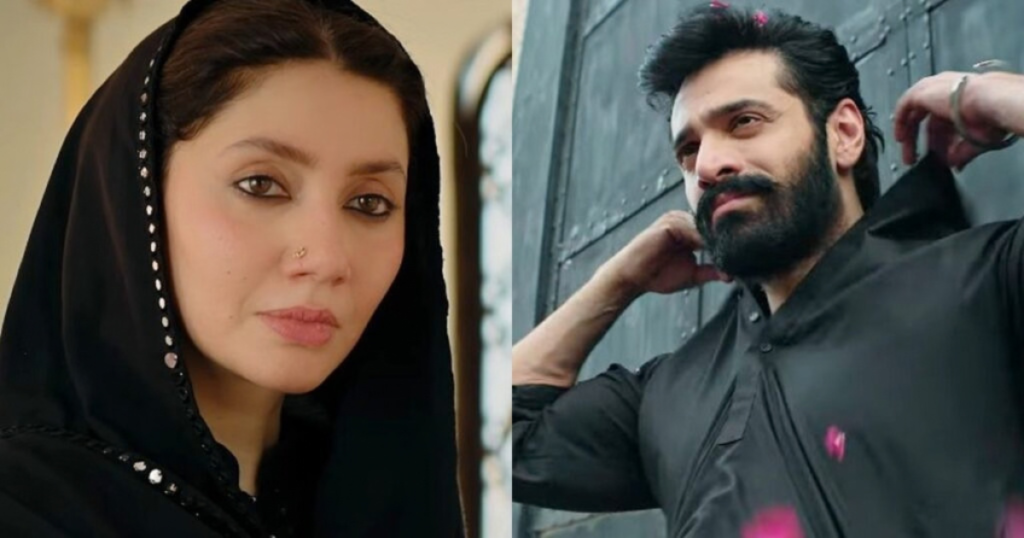
Mahira Khan and Wahaj Ali Are Already Killing It
A story this ambitious needed actors who could actually pull it off, and two episodes in, Mahira Khan and Wahaj Ali are doing exactly that.
Wahaj Ali switches between two totally different versions of Baala, the restless romantic kid from Mitranwali and the composed, burdened businessman in Faisalabad, and somehow both feel like the same person at different points in life. That’s not easy to pull off this early.
Mahira Khan’s work might be even more impressive because of how different her three versions are. The girl by the river is warm, playful, hopeful about a future she doesn’t know is about to be taken from her. Bilqees Bano is composed and dignified in a way that screams years of quiet restraint. And the Billo we see ordering an execution in 1999 is a completely different woman again, cold in a way that recontextualizes everything before it. Playing three distinct versions of one woman across two episodes and making all three feel real is genuinely hard acting, and she’s nailing it.
The supporting cast pulls their weight too. The family dynamics on both sides, Baala’s household and the Shah family, feel lived in rather than there just to fill space around the leads.
Why Starting With the Ending Actually Works
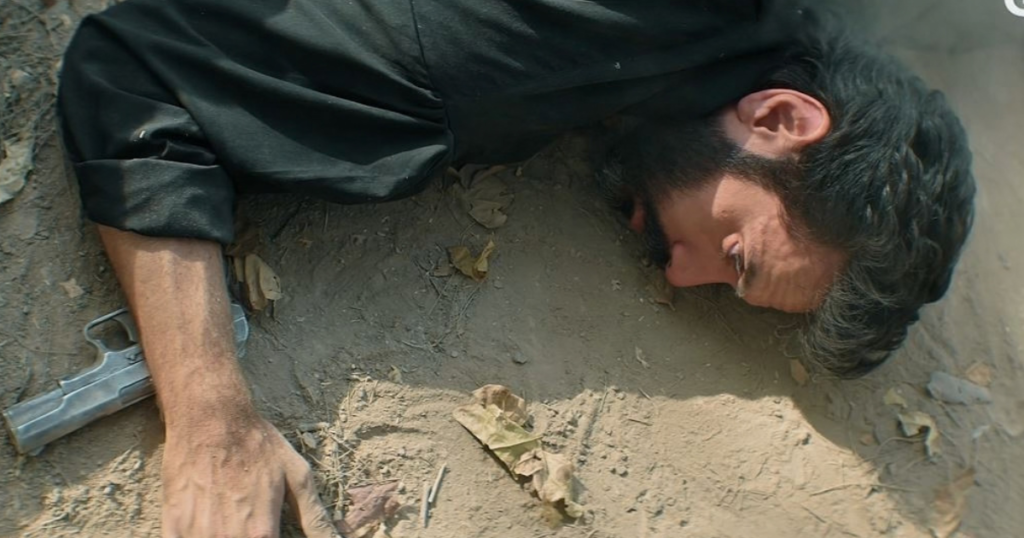
There’s a real risk in jumping around three timelines this fast. It could easily feel like a gimmick hiding a thin story. So far, Mitti De Baway avoids that trap because the structure actually means something.
Opening with Baala’s apparent death changes how you watch everything after it. You’re not wondering if Bano and Baala end up together. You already know, from the story’s own setup, that they find and lose each other three separate times. So instead, you’re watching every soft, sweet moment between them knowing exactly how much heartbreak is coming. That’s a more interesting way to watch a love story unfold, honestly.
What Still Needs to Come Together
Two episodes in, it’s fair to raise a few questions instead of just handing out praise.
The connections between the three timelines are clearly intentional, but they’re still being pieced together by us as viewers. That’s a good hook right now, but the payoff needs to actually make sense later, not turn into a mess of too many characters and timelines.
Pacing is also something to watch. An opening this intense sets a high bar. The show needs to keep that tension going without just throwing more shock value at us for the sake of it. With this many moving parts, spiritual devotion, arranged marriage, business drama, slow burn betrayal, every thread needs to actually matter.
Should You Watch Mitti De Baway?
This Mitti De Baway review would be incomplete without saying it plainly, yes, watch it. Yes, and honestly, with real excitement. It’s rare for a Pakistani drama to open with this much confidence, both in how it tells its story and how it looks doing it.
Mahira Khan and Wahaj Ali already feel like they’re about to deliver career defining work here. The Punjabi culture, the music, that aqeeqa scene, all of it gives the show a real identity instead of a borrowed one. And showing us the tragic ending of Bano and Baala’s story before we even see the beginning is a bold move that’s already changed how we’re watching everything else unfold.
Knowing now that this is a love meant to survive everything, only to lose to fate anyway, that graveyard scene in episode one hits even harder in hindsight. Two episodes in, Mitti De Baway has more than earned a spot on your watchlist.
What did you think of the first two episodes? Let us know in the comments.
If you’re also following this week’s other big drama moments, check out our take on Gulbahar’s opening episodes another slow build worth watching.
And if betrayal and heartbreak are more your speed right now, our breakdown of Bas Tera Saath Ho’s latest episode is worth a read too.
Watch the latest episodes of Mitti De Baway on Green Entertainment’s official YouTube channel
